
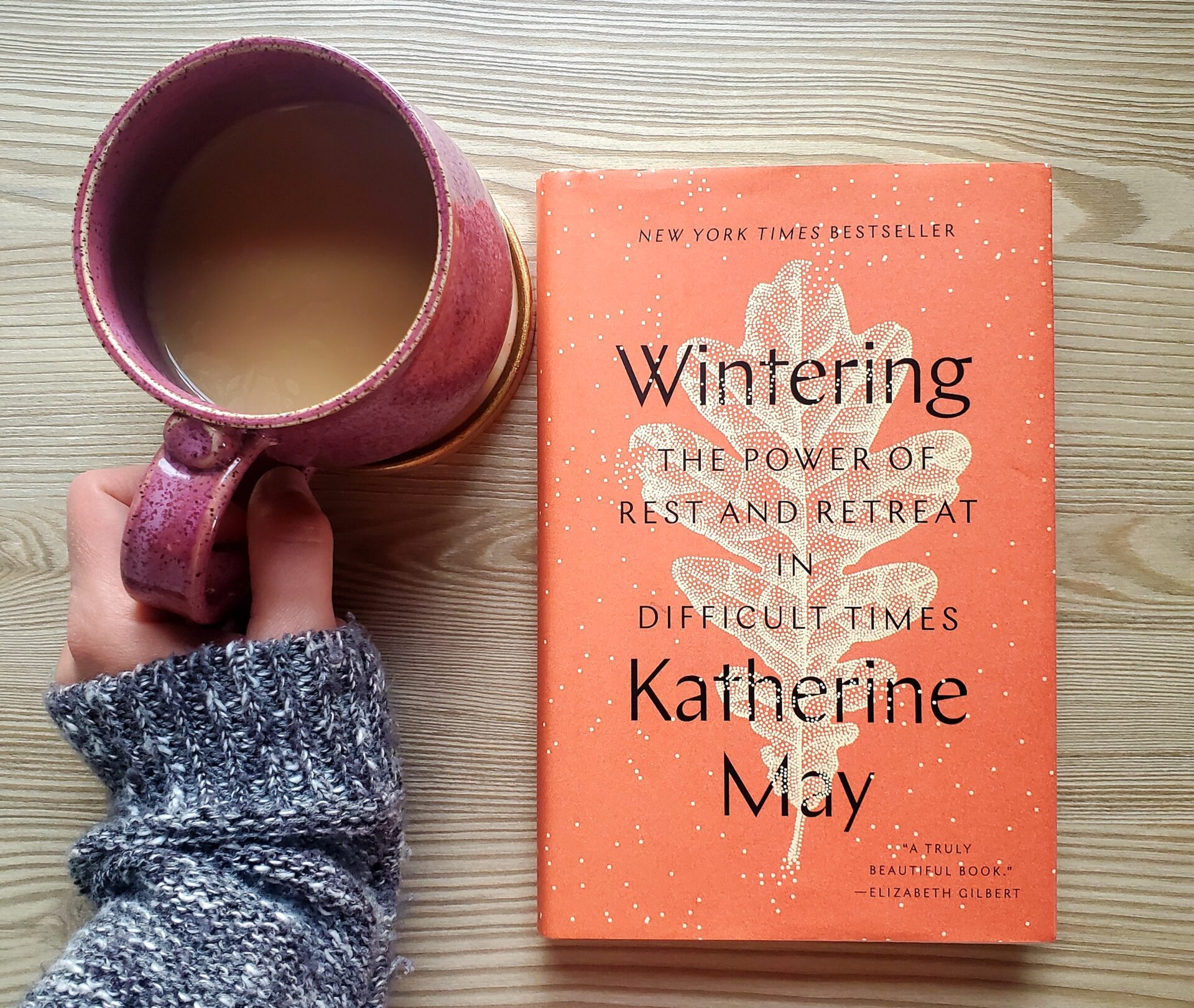
So many people have recommended that I read Wintering: The Power of Rest and Retreat in Difficult Times.
Maybe it’s because I love hygge and cozy winter vibes so much. Maybe it’s because I speak frankly about dealing with seasonal depression. Or, maybe it’s because I essentially work three jobs and need to rest, goddammit.
Whatever the reason, I was very excited to get my hands on a copy of Wintering and glean what pearls of wisdom I could from this book that’s beloved by so many.
So, you can imagine my disappointment when I didn’t actually like Wintering.
What’s Wintering about?
Wintering: The Power of Rest and Retreat in Difficult Times is written by UK author Katherine May. It’s a memoir about learning to accept the difficult times in life with grace. It’s about surrendering to a negative event or season that’s bigger than you instead of trying to deny it and power through, which ultimately leads to feeling burnt out.
Wintering helps you embrace difficult times with all the grief and disappointment they warrant. All this is done to help you fully recover and bounce back because, as May reminds us, everything is cyclical. This, too, shall pass. Spring always follows the winter.
What I liked about Wintering
The message of Wintering is something I can totally get behind. Since I’ve heartily embraced slow living and slow productivity over the past year, I fully acknowledge the existence and potential detriment of “winters,” both literal and metaphorical. “Winters” are times when life hands you a curve ball and you need to retreat and hibernate in order to ultimately come out stronger on the other side.
It’s always helpful to learn how to handle hardships, and I agree with May that navigating them with acceptance and understanding is a much better way to get to a “spring” instead of pummeling through the “winter” full of unresolved fury and bitterness.
What I didn’t like about Wintering
In theory, Wintering hits all the right notes. However, the memoir’s book description says that May “forms a guiding philosophy” about how to deal with the many winters of our lives.
Um, sorry. I disagree. Wintering is about the importance of embracing the winters. But, May’s book isn’t necessarily a guide on how to embrace these winters.
Quite honestly, this book’s a bit of a downer. And, yes, while I understand that “winters” are supposed to be the more difficult times in life, I expected a book on how to navigate them to be more uplifting and hopeful in its approach. More inspirational.
May cites lots of examples of her own personal “winters,” such illness, near death experiences, and children’s behavioral issues, just to name a few. While she does offer up parables to give you hope and stories about how she hunkered down and rode out her own winters, they’re not exactly relatable. I mean, most people don’t have the luxury of lounging in an Icelandic hot spring as a way of “wintering” through their problems. Or, randomly deciding to home-school their kids when problems at traditional school rear their ugly heads.
As a result, the process of “wintering” comes across as a coping mechanism for the financially and socially “privileged” rather than a tactic that everyone is able to easily employ.
Wintering on managing first sleep and second sleep
There was one part of Wintering that struck a personal and helpful chord with me: the passage about “first sleep” and “second sleep.” May addresses the centuries-old sleep pattern of sleeping in two distinct periods. You can read more about first and second sleep here, but here’s a quick overview:
Sleep like the dead for four hours, usually between 10pm-2am (first sleep). Then, be wide awake for 2-3 hours in the middle of the night. Nothing can make you get back to sleep during this time. Finally grow tired again around 5 or 6am and fall back asleep (second sleep).
My body has long embraced the sleep schedule of a medieval peasant, and I’ve been cursing that in-between sleep period for decades. Anyone who’s battled insomnia knows how super frustrating it is to be wide awake when you’re supposed to be asleep — and when it feels like everyone else is asleep.
Wintering taught me to appreciate the in-between time by showing me that these few hours can be restful, even productive, without being stressful. That window between first sleep and second sleep is a time when no one else is awake, which means I don’t have any obligations to work, friends, family, errands, meetings, etc. My phone is mercifully quiet; no one’s calling and no one’s texting, and I’m not expected to respond even if they are. It’s my time to do whatever I want.
Once I started embracing the “extra time” in my day, I was able to use it to my benefit instead of my detriment. I leaned into it instead of fought it, and it’s been a restorative experience.
Should you read Wintering?
Despite all the hype out there, I honestly don’t feel Wintering is worth the read. Especially if you’re looking for guidance on how to care for yourself during difficult times. This memoir felt much more like the author working through her own shit instead of showing someone else how to work through theirs.
That said, a lot of people would disagree with me. Most readers absolutely adore Wintering. They find May’s stories relatable and her message comforting, to the point where they re-read her memoir every year when winter approaches. Since I seem to be in the minority, you may want to give May’s memoir a go.
What’s the book-inspired recipe for Wintering?
Be sure to check out my book-inspired recipe: Comforting Chicken and Rice Soup.


Hi CG. Thank you for your honest review of Wintering – my reading experience has been the same. Whilst I can relate to some of the aspects being spoken about, in the back of my mind throughout has been the sense of privilege and entitlement Katherine May has expressed – whether this be access to a beach and spa or her willingness to challenge an already overwhelmed NHS in her first few pages. I have taken some good points away and its also helped me to ease back into reading whilst also using some critical thinking.
Hi, Jas. You nailed it — reading WINTERING requires some critical thinking. There are some great points in the book, but if you take it at face value, I feel like some readers could end up more depressed than when they started! I think the most important part of the book is that it generally talks about wintering “periods” — just difficult times in your life when you need to give yourself more kindness and grace. We all have those periods in life, and we could all do with more kindness toward ourselves.
While I agree with your bridling at the overwhelming privilege evident in May’s book, I did find the guidance offered to be of use. When I recommend the book to folks nowadays I suggest they skip right to the end, where these relevant tidbits are summed up. If we need reminders for these healthful practices, so be it. I’ve tried to create single word prompts towards this end.
Each day:
– Move your body (Activity)
– Go outside (Nature)
– Prepare food and eat well (Good Food)
– Plan for good sleep (Sleep)
– Play or learn something (Create)
– Connect with people (Connect)
That May lives a charmed and yet still human life is helpful (“even rich people get ill and get depressed and have troublesome children!”), and I appreciate her sharing her experiences with us.
Hi, A,
You know, it’s funny — the further away I get from reading WINTERING, the more fondly I look back on some of the insight it offered, haha. I agree that the summary near the end is helpful. Thank you for sharing your daily prompts! I keep something similar on my meditation table; they’re written on index cards and I shuffle through them each morning. We can all use more reminders like those on a regular basis.