
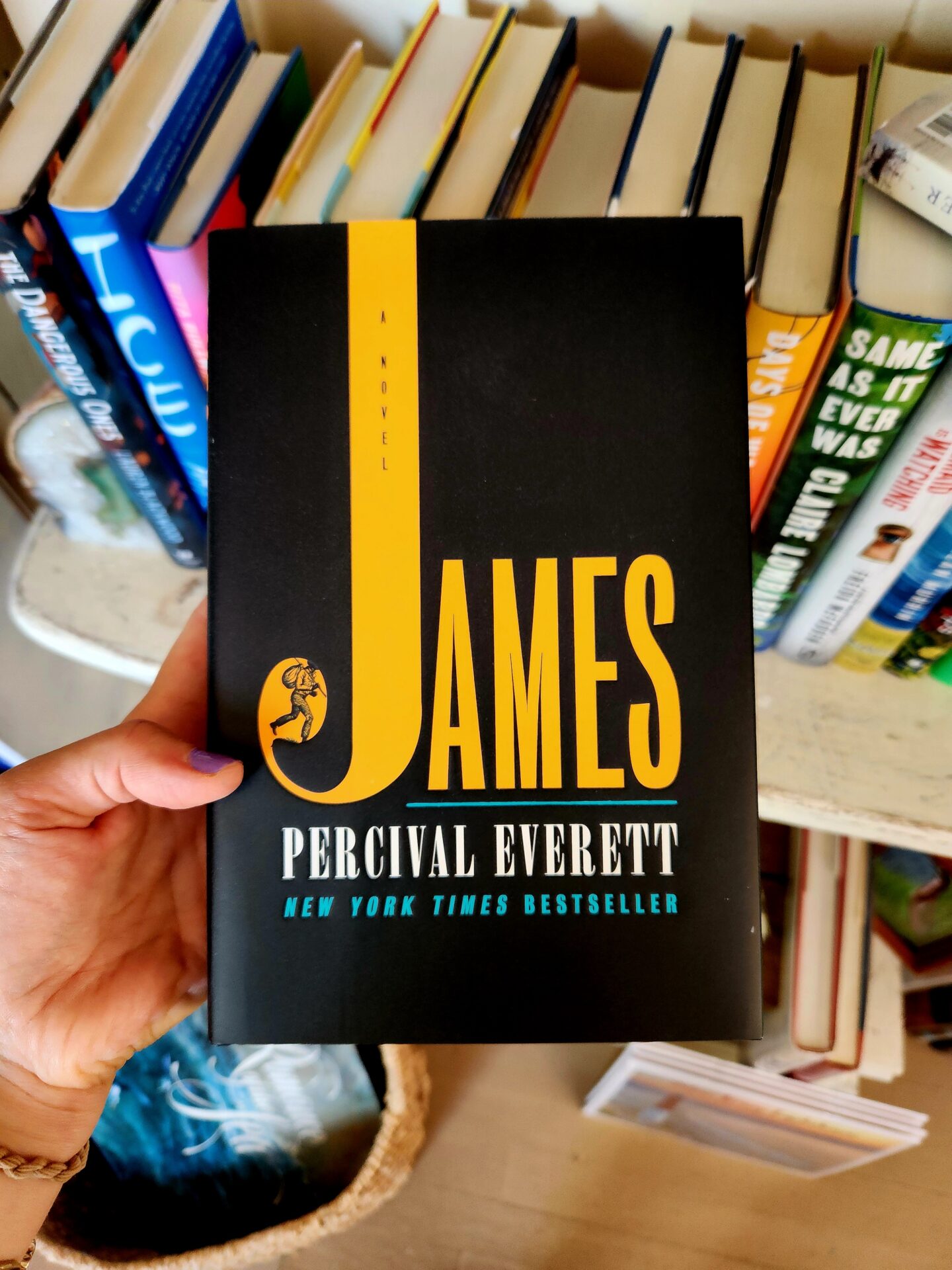
Given that James was recently awarded a Pulitzer Prize, I figured it might be a good time to post my book review of this reimagined masterpiece by Percival Everett.
This one is worth the hype, Tartlets.
What’s James about?
James is a retelling of Mark Twain’s The Adventures of Huckleberry Finn from the point of view of the enslaved man Jim (James), who accompanies Tom and Huck along their adventures in the original Twain story. We follow Jim as he runs away from his slave master in an attempt to avoid being sold, and then he tries to get back to his wife and daughter in order to steal them away to freedom.
While James includes many of the “adventures” that Jim, Huck, and Tom experienced along their classic journey, Everett adds in numerous new side-stories and insights directly related to Jim, slavery, and life in the 1860s American South for enslaved people.
While The Adventures of Huckleberry Finn is an adventure story, James is a survivalist story.
James is an example of beautiful literary fiction that “shows” instead of “tells”
Tartlets, Percival Everett can write. OMG. The first chapter of James blew me away with all that’s packed into it. I fell in love with Everett’s writing style instantly, and I knew this novel was going to be excellent. But, the author is a Pulitzer Prize finalist (and, now, a Pulitzer Prize winner) and the author of about 20 books, soooooo… yeah. #NotSurprised.
Fellow writers, take notes. The first chapter of James is a master class on “showing” vs “ telling.”
Despite all this literary technique packed into the novel, it’s an accessible read. The language isn’t formal or stuffy like is found in the “traditional” classics. I loved analyzing the crap out of James, but this is also a good read for someone who wants a damn good story.
What I loved about James
Something that really grabbed my attention in James is how well Everett captures the dichotomy of enslaved life and weaves it into every aspect of his novel.
Through Jim, we see how enslaved blacks are (negatively) viewed in the white man’s world — and then we see who the enslaved really are once they’re among the relative safety of one another.
This difficult dynamic between enslaved people and whites is further complicated by how Jim relates to Tom and Huck in James. Jim feels a palpable tenderness towards the boys, despite the fact that they’re white and could potentially be “the enemy” one day. There’s also a special bond between Huck and Jim. You see snippets of it in the first chapter, and then it grows as the story progresses.
Even the book title “James” emphasizes the dual nature of the enslaved people’s reality. Jim is referred to as such for most of the novel, and that’s mostly because it’s the nickname the white people have given him. Note, though, that the book isn’t called “Jim.” It’s called “James” – the main character’s formal, elegant, full name that he prefers to go by.
Spoiler-free trigger warnings for James
I won’t lie: James is a sobering read. Many parts are dark and depressing because, well, fucking slavery. We’re talking abuse, torture, hangings, rape, lynch mobs, and the like. There’s everything bad in this book that could be there, and then some. A specific type of slavery even showed up near the end that I didn’t know had existed — slave breeders. Um, wtf?? What the fuck is wrong with people.
Despite the horrific truths set down in the novel, Jim manages to keep the reader in the light. He’s always looking forward, always making a plan, always sharing hope. His heart is what carries him, and this story, through to the end.
I spent a lot of time wondering how Jim’s story would finish. Would Everett give James the happy, ride-off-into-the-sunset ending we’re all rooting for? Or, would it be depressingly realistic? Or, maybe a little bit of both?
The ending of James shall remain secret, but I’ll say that it wasn’t what I expected.
Should you read The Adventures of Huckleberry Finn before reading James?
While I’m sure reading the Mark Twain classic will give some background into some of the “adventures” in James, you don’t need to have read The Adventures of Huckleberry Finn to enjoy James.
I read James without knowing anything about Huck Finn or Tom Sawyer, and I still enjoyed it immensely. Honestly, I don’t even want to read Twain’s story now. I like Everett’s version that much.
Should you read James?
Everyone should read James. It’s a beautiful, riveting, emotional, and evocative novel. I was sucked into Jim’s story right away and was right there with him for every one of his undertakings on his quest to free himself and his family.
One thing to keep in mind about this book, though. A lot of book descriptions call it “uproariously funny.” There’s a lot of dark, wry humor in James. It usually comes from Jim as he’s commenting his status as an enslaved and/or black person. And there are a few amusing characters that pop up throughout the book.
I appreciated the humor tucked into the corners of this book, but I wouldn’t say James is funny. This isn’t a comedy. It’s a serious story told in an accessible way. Just be prepared for that going in.
What’s the book-inspired recipe for James?
Stay tuned for the book-inspired recipe: Bacon Honey Cornbread.


Slavery is a horrifying period that happened in our country. I did a plantation tour in March and I found out about slave breeders too. I don’t understand (and very sad) that I was so ignorant about it. I will endeavor to read this book. Thanks for the recommendation. Elle Kirk
Hi, Elle! I haven’t done a plantation tour, but I’ve heard a lot about them from friends who have visited the South. It sounds very educational but also very horrifying. I hope you get a chance to read this book, though. It’s REALLY good.